Layout changes
Design and quantities
Lianta for investors · product vision
One conversation. The work of an entire project, connected.
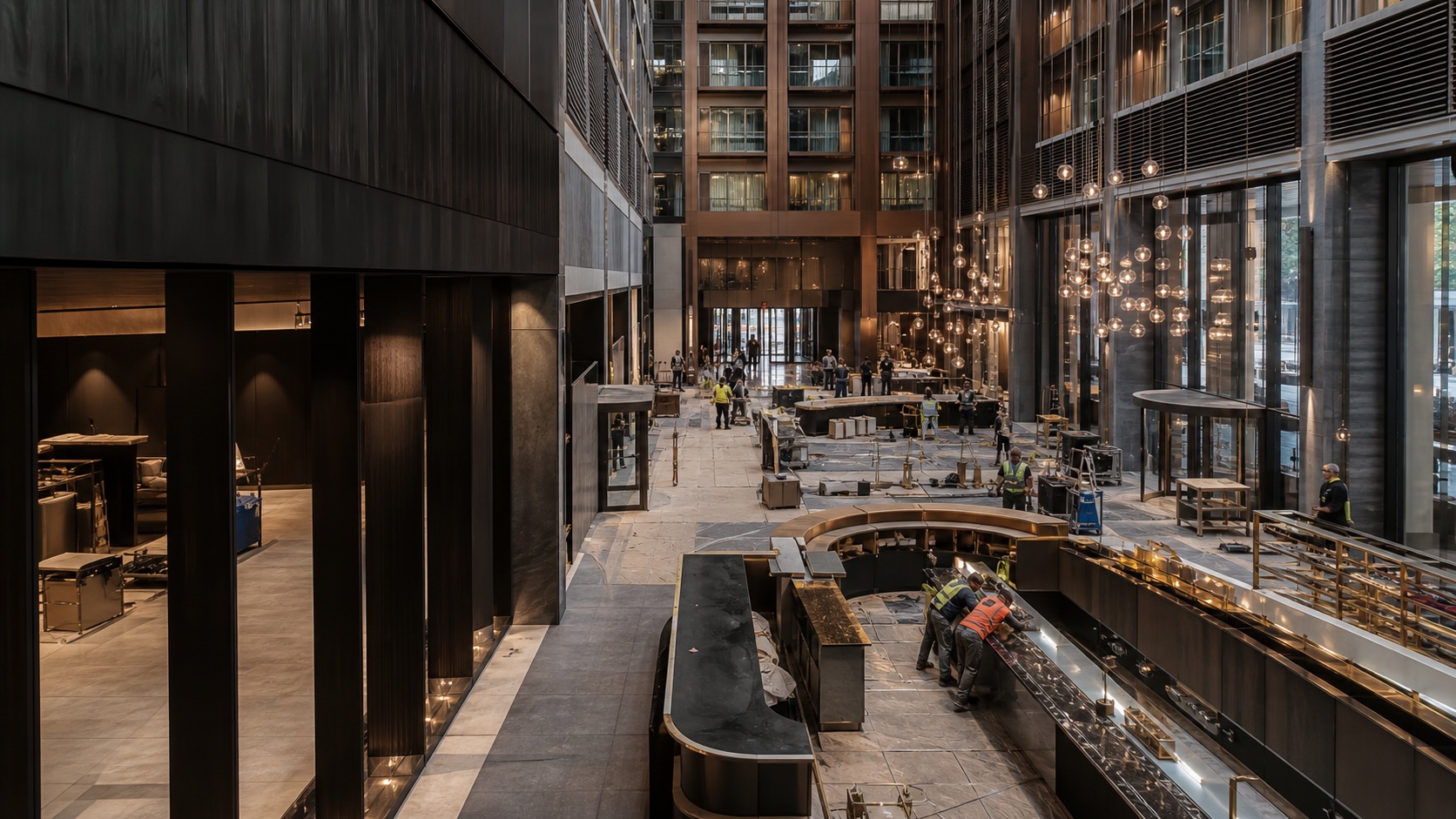
Lianta is building a software platform for getting commercial spaces ready to open: design, building work, mechanical, electrical and plumbing services, equipment, furniture, installation, testing and handover.
Our ambition: give owners, main contractors and participating companies an AI team that turns plans into coordinated action—with less manual chasing and clearer decisions.
Why this matters
The project has one opening date. The work runs through designers, contractors, suppliers and installers—each with their own information, priorities and communication channels.
Design and quantities
Power, heating and cooling
Equipment and furniture
Delivery, installation and opening
Connecting those consequences takes time from a team that also has a business to run. Lianta brings the information together, so the next decision does not depend on another round of chasing.
Illustrative workflow · the product we are building
Ask Lianta by voice or text. Ten specialist AI roles prepare comparisons, questions and documents. Company teams exchange the relevant, authorised information; people retain technical and commercial approvals. No dashboard required.
“The shop layout has changed. What does that mean for the opening?”
Owner example selected.
Work inside the company
Connect the revised layout to the building work, furniture order and opening plan. Prepare the missing questions and the next choice.
Budget ceiling, internal priorities and received quotations.
One authorised hand-off
The Owner’s project lead authorises the request. Spending and the changed work remain unapproved.
Connect the revised layout to the building work, furniture order and opening plan. Prepare the missing questions and the next choice. The prepared hand-off goes from Owner’s AI team to Appointed contractor’s AI team: Layout R4 and a request to review the affected work. The Owner’s project lead authorises the request. Spending and the changed work remain unapproved.
Check affected trades, ask for missing details and prepare the change quotation and programme implications. The prepared hand-off goes from Contractor’s AI team to Owner’s AI team: Reviewed change quotation and proposed work sequence. The contractor confirms its response. The Owner’s project lead decides whether to accept the cost and programme change.
Check revised dimensions against the product specification. Prepare the offer, lead time and installation requirements. The prepared hand-off goes from Supplier’s AI team to Owner’s AI team: Reviewed product details, quotation and lead time. The supplier authorises the offer. The owner reviews the options before placing an order.
Organise site questions, identify affected drawings and prepare the issue record for the designer to check. The prepared hand-off goes from Design practice’s AI team to Appointed contractor’s AI team: Relevant drawing extract and a site-dimension question. The designer approves the question and reviews the reply. Appointed professionals retain design and technical decisions.
Connects the room layout, drawings and design decisions with the work to be done.
Organises the scope for partitions, doors, finishes and specialist building trades.
Coordinates heating, cooling, ventilation, power and plumbing requirements with your specialists.
Turns the agreed design into consistent work packages and product requirements.
Finds suitable trade contractors and suppliers, locally and internationally.
Clarifies quotations, organises company checks and compares costs, timing and support.
Connects lead times, deliveries, site access and work sequences to your target opening.
Follows up with the companies on site and tracks the impact of changes and additional work.
Tracks testing, snags, training, warranties and the records needed to hand over the space.
Prepares the information and tracks the decisions your appointed specialists and authorities need.
Market context and entry point
Start with a real project, several participating companies and limited in-house coordination capacity. Expand through work that becomes useful enough to repeat.
Global non-residential building activity
US$2.63tnOxford Economics’ October 2025 forecast for 2026, in constant 2023 prices. Broad construction context—not Lianta’s revenue market.
Read the Oxford Economics forecastHotels, restaurants, shops and warehouses. Coordinate the building work and purchases around one operating goal.
The owner’s routeHelp small and mid-sized main contractors coordinate their own client projects, trades, suppliers and documents.
The main contractor’s routeThe commercial model
The owner, operator or main contractor commissions an agreed coordination scope. Invited contractors and suppliers receive basic AI support free for that project. Additional paid partner services are a future direction.
A contractor prepares a quotation. A supplier reuses approved product details. A main contractor brings Lianta into the next project.
The network opportunity is less repeated preparation between connected companies—not just more registered accounts.
The scaling aim is repeatable workflows with less effort per accepted result. The cost model includes AI processing, integrations, support, human review and the cost of serving free participants.
Repeat paid projects and the extra value of already connected companies are separate tests.
Read the underlying industry evidence
These sources explain the project pressures behind our thesis. Select a topic to see the evidence, its date and the original publication.
RICS guidance recommends including furniture, specialist installations, infrastructure and utility connections in the full project budget. Clear briefs and controlled changes help keep the work aligned.
RICS · practitioner guidance · January 2024Research commissioned by FIS, with the University of Reading and AMA Research, examines scope and procurement pressures through 269 survey responses and 20 interviews. These are industry participants’ reported experiences, collected in 2022.
FIS / University of Reading · February 2023The FMB and CIOB’s H2 2025 survey drew 493 responses from UK small and medium-sized construction firms. It reports cost and skills pressures, with shortages affecting project schedules.
FMB / CIOB · H2 2025 surveyceda’s LI~LY restaurant case describes equipment changes, restricted access and a missing three-phase electricity supply. It shows why equipment, services and delivery cannot be planned in isolation; cookline commissioning was still awaiting the power connection in the published account.
ceda · supplier case study · 2025The Carbon Trust’s hospitality guidance recommends considering equipment energy use and maintenance over its lifetime. This durable purchasing principle informs the case for comparing operating costs as well as the initial price.
Carbon Trust · hospitality guidance · March 2018Broader sourcing can surface suitable equipment, materials and controls beyond a company’s usual suppliers. Compare installation, energy use, maintenance, local service and workflow—not just the purchase price.
Explore the sourcing approachHow we intend to build the advantage
Construction platforms are adding AI agents. Lianta’s chosen focus is the complete commercial opening and the work between the companies delivering it. Procore’s June 2026 announcement
Accuracy, customer acceptance and full delivery cost.
Paid projects and useful partner participation.
Authorised information passed between company teams.
More project types, capabilities and markets.
The development and validation path—not a record of completed milestones.
An investor conversation
Discuss the product, business model and next milestones with the Lianta team.